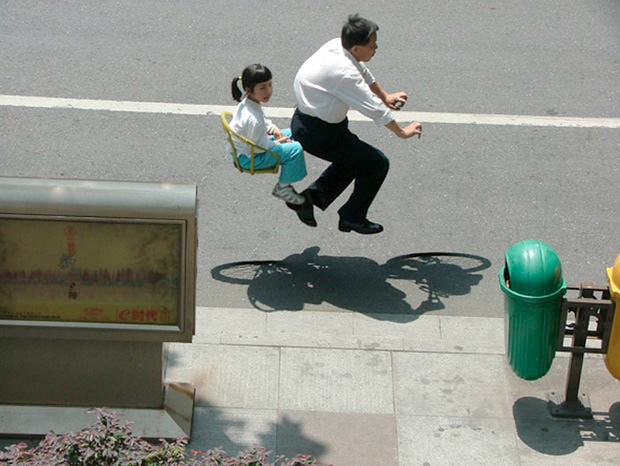
Great photo! 1846. U.S. Capitol Under Construction

- Posted using BlogPress from my iPad
If you follow our business really closely, you probably know that we had a pretty big outage in the East Village on October 6th. You sure know about it if you happen to live in New York City and have a Twitter account – it was understandably all over the place.The New York Times’ East Village blog mentioned this, naturally. Essentially, a number of nodes connected to this portion of fiber lost network connectivity, interrupting service to approximately 24,000 customers in the area.
Our VP of Engineering in New York City shared some photos of the mess with me, and I thought our customers would like to see what a large, lengthy, and unusual outage looks like.
Here, you can see a cross-section of what the cable looked like before the fire:
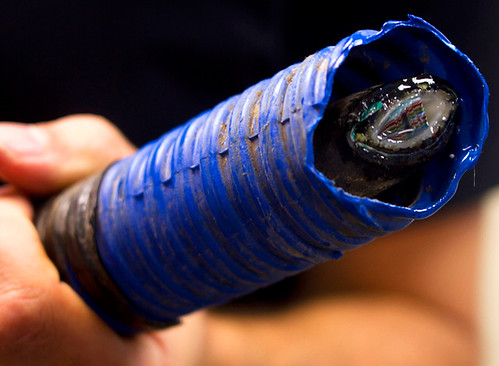
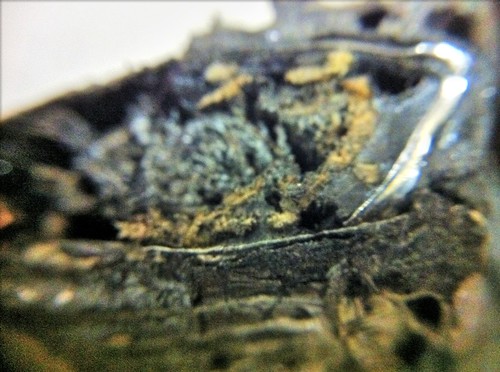
I took a closeup with the macro lens on my iPhone:
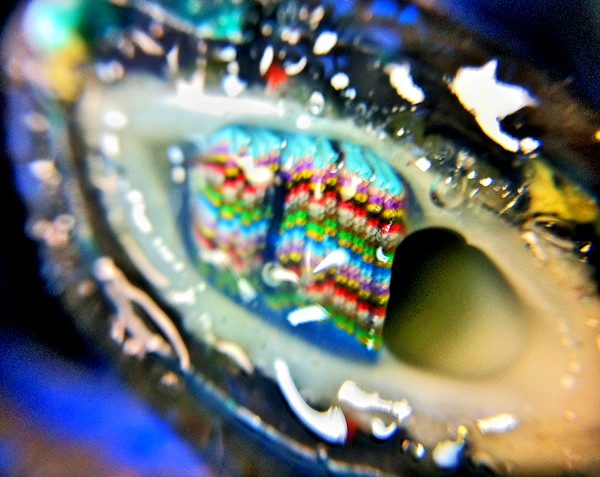
Those multicolored things are a protective sheath around a single fiber-otic strand roughly the width of a human hair. Each strand carries video, broadband, and phone services to a node, which, again, can serve 300-600 homes. The colored sheaths are slathered with a sort of insulating goo inside the cable shell to help protect the fiber from moisture. The whole enterprise looks a little like an alien cyborg’s reproductive organ, doesn’t it?
Here’s what the cable looked like after being subjected to an electrical fire:
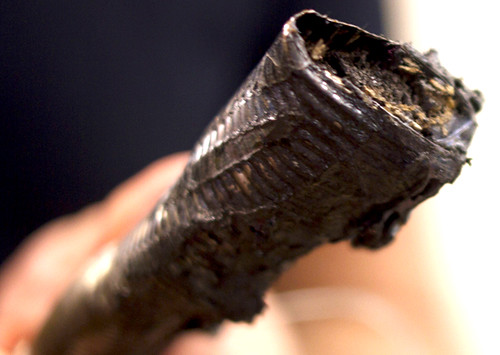
And again, with an iPhone macro closeup:


A couple of Edward Tufte's Sculptures in the October storm. Great stuff - all of them are worth a look.
Here are my sculptures at Hogpen Hill Farmsduring the recent catastrophic snow stormin Connecticut.
Skewed Machine,2007:
Rocket Science #3, Airstream Interplanetary Explorer,2011:
(Via Ask E.T)
Wow – Impressive indeed!
Photos Taken Using iPhone 4S Look Impressive:
Apple has posted a series of original and unretouched photographs taken using iPhone 4S' camera on the Camera features page and they are quite impressive.
Google+ completely changes the photo sharing game. Not just a little bit — alot. This may be the most significant shift in photo sharing that we’ve seen since the introduction of Flickr. There is more engagement going on with photographs on G+, more ways to share photographs on G+, and it is growing at a rate that blows my mind away. Photos are elegantly presented as large oversized thumbnails in stream views (in contrast to Facebook’s stingy microscopic photo thumbnails that I’ve never quite understood). When you click through the photo you get the most elegant lightbox view (on black) of any photo sharing site out there today.

a reflection of the intense popularity of mobile smartphones and specifically the rise of the iPhone. You always have a camera in your pocket (and with the 3GS, a camcorder too). Just as important is that it’s easy to upload your pictures directly from your mobile phone to your Flickr account. That’s something most digital cameras can’t do, since they aren’t connected to 3G or Wifi connections.The impact is even more startling when you compare flickr uploads from the iPhone to other camera phones. I'd love to see a timeline on the x-axis to better understand this data. It looks like the was an initial ramp up in iPhone traffic (maybe) the release of the 1st generation iPhone, then a plateau, and finally another spike - the iPhone 3G?


We are currently seeking an experienced Network Infrastructure and Security Consultant to join our client, a premier provider of professional I.T. services.
This role requires a strong Microsoft infrastructure background with complementary skills in Cisco (routing & switching) and network security (firewalls). Applicants should have prior consulting experience including design, implementation, documentation and support of IT projects.

14 Creative Advertisements | The Best Article Every day
(Via Killer Innovations: reblog.)
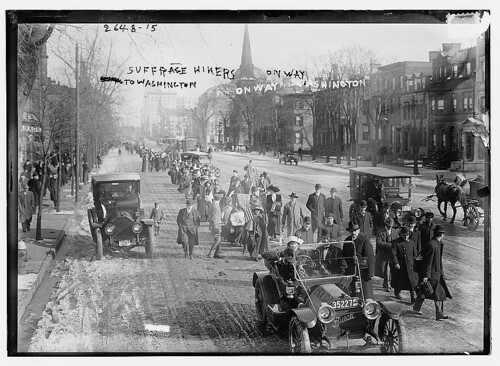 I subscribe to the Library of Congress' photostream on flickr. Great source for some really cool and sometimes historic photos. Above is a photo of Suffrage hikers on the way to Washington and below a photo of Rosalie Jones, Ida Craft and other suffrage hikers. The widespread availability of these and other photos is a result of this ongoing project between Flickr and The Library of Congress. If you combine photos like these with historical archives from the New York Times, such as this - Suffrage Hikers Undaunted By Cold (from the February 13th, 1913 NY Times - WOW!) and even photos from Life Magazine now hosted by Google, you could create some really rich instructional materials.
  Lastly, here is a screenshot from the NY Times archive.
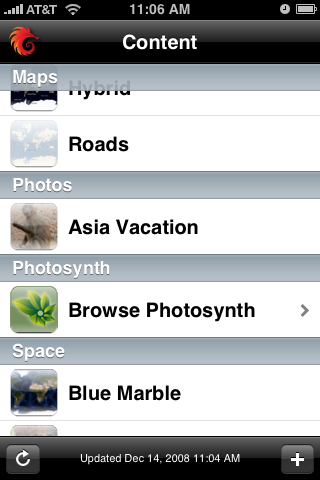
This is a really great step forward for popularizing multi-resolution image formats and opening up a whole new vector in interface design. As a former member of the team you can read my take on where this is heading over at http://8ninths.com/?p=686Here are some screenshots:

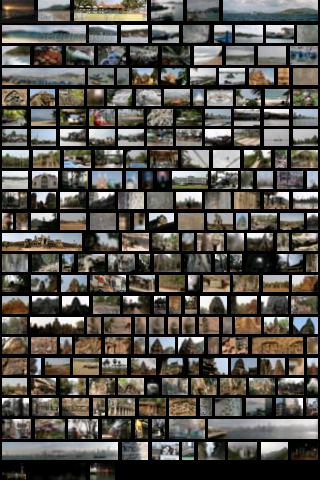

 And another
 Notice how I can zoom in and still maintain the detail


[Microsoft] released a Seadragon application for the iPhone today that lets users “infinitely zoom” on high quality images with near zero transition times.