The Library of Congress has been working to digitize their collection of photos and make them publicly available on popular photo-sharing site flickr. I've subscribed to their feed on flickr, so I get notified in my feed reader anytime the LOC adds new photos. Here's a great shot of Grand Central Station taken between 1910 and 1915.
Friday, August 15, 2008


The State of Math Education
This is an old video, which has been floating around the Internet for years. M. J. McDermott gives a really provocative presentation comparing traditional mathematical reasoning techniques to newer methods being promoted in some schools. I'm not sure that Singapore Math is the answer, as McDermott suggests, but I began to wonder myself, when my daughter asked with help with Stem and Leaf Plots - something that, as an engineer, I had never heard of.

Thursday, August 14, 2008
Be Like Stanford
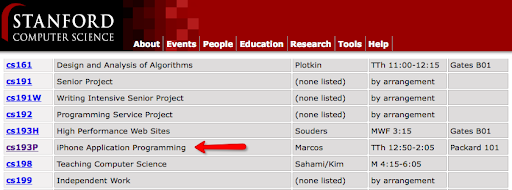
Do you remember the old "Be Like Mike" commercials featuring Michael Jordon? Those commercial - I'm not even sure what the product was - were succesful because Michael Jordon was the best in his profession. The lesson, I think, is that when you want to be the best at what you do, model your behavior on the best in your field. We can't be Michael Jordon, but maybe we can be like Mike. In education, you could pick any number of schools, but for now let's consider Stanford. I must admit I'm jealous of schools like Stanford for their enviable location. Forgetting for a moment the weather, consider how many dynamic, technology-rich companies there are in the Palo Alto area. With that much innovation in the region, it's not surprising that Stanford would be driven to innovate as well. It's not just that you have access to the brain-power and the demand for new courses and programs, you also have to have the institutional infrastructure and support to be able to quickly develop these courses and roll them out. Someone - maybe everyone - at Stanford realizes the importance of being able to react quickly to market needs and demands - much more quickly than the typical glacial pace of the academic approval process. Maybe we can't be Stanford, but we can "Be Like Stanford!" If you have Tuesday and Thursday afternoons free you might want to sign up!
Wired Campus: Stanford U. Lists Course on iPhone Programming for the Fall - Chronicle.com
Fans of Apple gadgets have been happily blogging about a listing in Stanford University’s course catalog for the fall that includes what might be the first college course on programming for the iPhone.
The course is listed as being taught by “Marcos,” and the word is that the professor will be Paul Marcos, a long-time Apple employee. Officials for Stanford’s computer-science department could not be reached for comment.
Stanford has been quick to offer courses on new technology in the past. Last year it offered a course on programming applications for Facebook, which became a huge hit.
Learning Science Online - A Study
From the Journal of Interactive Online Learning, here's a really interesting study written by Elizabeth Rowe and Jodi Asbell-Clarke from TERC . TERC is a not-for-profit education research and development organization focused on improving math and science education from pre-kindergarten through college. It's one of the few fairly comprehensive studies of its' kind that I've seen.
AbstractHere are some interesting findings from the study:
Online education is a rapidly growing phenomenon for science teachers. Using a sample of 40 online science courses for teachers offered during the 2004-2005 academic year, the Learning Science Online (LSO) study explores what characteristics of online science courses are most strongly associated with positive learning outcomes among science teachers, after accounting for teachers’ prior science experiences and demographics. This research is unique in that it is the first aggregate study of teachers learning science online in a wide variety of educational programs. Hierarchical linear modeling points to changing roles of instructors and students in online courses, with lower perceived levels of instructor support and a supportive course design strongly associated with positive learning outcomes.
Summary and ImplicationsReally interesting finding that is sort of counter-intuitive, making the case for greater faculty involvement in course design and less online interaction. Most faculty I know that teach online feel obligated to be in their courses constantly, interacting, starting and jump-starting discussions, prodding students and really being as much a presence online as they are in a traditional classroom. I like the point made that instructors need to "... fade the interaction and let students play a significant role in their own learning, including choosing relevant discussion topics." Giving up control - not an easy thing to do. Download the full article here.
This study examined three types of student outcomes: final grades, mastery of science content, and quality of participation in online discussions, and their relationship to specific course characteristics. Important findings include that:
Some overall implications of these findings for developers include the importance of course design for students’ success. Courses with supportive structures in place through materials presented opportunities for student achievement, even when there was less instructor support. This suggests that the role of the instructor shifts in online learning to one who must pre-design the course with the student in mind, but then fade the interaction and let students play a significant role in their own learning, including choosing relevant discussion topics.
- High levels of course supports, meaning scaffolding within the materials to help students understand and link concepts, were important for student’s mastery of content and quality of participation in online discussions.
- High levels of instructor support were related to higher grades but lower mastery and quality of discussion.
- Students in courses with high frequency of hands-on and minds-on activities tended to get lower grades, while those in courses with high frequency of pen and paper activities tended to get higher grades.

Wednesday, August 13, 2008
No Signal - How About Your Own Mini-Cell Tower
 Image via Wikipedia
Gordon Snyder has been telling me for some time about the concept of a femtocell. From wikipedia - a femotocell is
a small cellular base station, typically designed for use in residential or small business environments. It connects to the service provider’s network via broadband (such as DSL or cable); current designs typically support 2 to 5 mobile phones in a residential setting. A femtocell allows service providers to extend service coverage indoors, especially where access would otherwise be limited or unavailable.Here's a review of a femtocell from Engadget Mobile. If you have weak signal in your office or home, this may be a great alternative. This also has potential as a teaching tool, as most wireless course don't have access to a cell tower. Sprint AIRAVE review - Engadget Mobile
The long-awaited CDMA femtocell (once dubbed the Samsung Ubicell) essentially acts as a super in-house signal booster, or, if you'd prefer, a mini Sprint tower sitting right beside your router. If the concept is ringing a bell, it's because you've certainly seen a similar setup with T-Mobile's @Home service. So, the real question here is can the AIRAVE really help your reception? And more importantly, is it worth the extra coin? Read on to find out.
...
The box itself is no bigger than most home routers, it's lightweight, and it can be stored horizontally or vertically. 'Round back, you'll find an Ethernet jack, a GPS socket, an AC connector and an On / Off switch. After running overnight, the device was still rather cool to the touch, so there's no worry of it melting anything that's sure to sandwich it in your already cramped desk.
And yeah, about that GPS port. Much to our dismay, the AIRAVE requires that a GPS lock is found before it begins operating, and it requires that said lock puts you within the United States of America.
Furthermore, Sprint claims that this unit is all ready to support multiple callers, and while that is indeed true, the actual bandwidth requirements are a touch harder to come by. For a single call, you need at least 40Kbps up and down in order to not break up, while 2 callers needs twice that and 3 callers thrice. If a fourth or fifth caller attempts to tap into the AIRAVE while a trio of calls are already underway, those mobiles will be directed to the nearest cell tower. Should one of the original three hang up, however, the "next in line" will hop onto the vacant AIRAVE slot.
We tested the unit in a home with notoriously awful Sprint coverage -- we're talking 0 to 1 bars, flashing in and out of roaming / Sprint service depending on how the wind blows. We used a certain Sprint handset in this domicile for a solid month and dropped countless calls and could barely hear when connected unless we waltzed over to "that spot by the window" and remained there for the duration of the conversation.
...
our signal strength indicator shot up from 1 bar to 5 bars immediately after the AIRAVE was finished with its lengthy boot-up process. We walked around to various nooks and crannies and never saw the bars dip below 3. Remember folks, this is all happening in a house that never saw 3 bars of Sprint service prior to the AIRAVE being powered on. Upon dialing our first test subject, we heard a brief double beep just before the ringing began to let us know that the call was being funneled through the AIRAVE.

Tuesday, August 12, 2008
John McCain Knows Wikipedia - Sort Of
 Image via Wikipedia
Really interesting story about wikipedia. When it comes to wikipedia, there are two camps of educators - those that think it's a great source of information and a great resource for students and faculty. I'm squarely in that camp, pointing to studies favorably comparing wikipedia to traditional encyclopedias, but also quickly pointing out that there are right ways and wrongs ways to use wikipedia - just like any other source. The other camp includes educators that abhor wikipeda and ban it from their classroom. There we are, back to that knee-jerk reaction to technology - not unlike banning cell phones, and ipods.
What's interesting about this wikipedia story is that the culprit is not just any run-of-the-mill student, but instead one of the two men - John McCain - vying to be leader of the free world. The claim here is that McCain - yes I know McCain wouldn't know wikipedia if he tripped over it, so let's say one of his staffers or speech writers used information from the wikipedia entry on the country Georgia to write portions of a recent McCain speech regarding the Russia-Georgia conflict. It's one thing for a student in a freshman English class to use wikipedia as a primary source; a presidential candidate - not so sure. Someone in the comments of the story questioned whether it is possible to plagiarize facts. Unfortunately, this comment assumes the veracity of the facts in the wikipedia entry - which I can't verify without more research. I'm not sure about what's really going on here, but it's fascinating to watch the intersection of politics and web 2.0.
CQ Politics | Political Insider - Did McCain Plagiarize His Speech on the Georgia Crisis?
A Wikipedia editor emailed Political Wire to point out some similarities between Sen. John McCain's speech today on the crisis in Georgia and the Wikipedia article on the country Georgia. Given the closeness of the words and sentence structure, most would consider parts of McCain's speech to be derived directly from Wikipedia.

Monday, August 11, 2008
Back to School: Time to Take a Look at your Slides?
Here's a great Slideshare slide deck from Garr Reynolds at presentationzen. In addition to providing some really instructive before and after slides, I think anyone will be inspired by just exploring random slides in the set. Please take some time this summer to take a look at your slides and start to re-invent your presentation style.

Subscribe to:
Posts (Atom)
LinkWithin
