University lectures are past their sell-by date and should be abolished in favour of virtual teaching, according to a student leader.Click to read the rest
Wes Streeting, president of the National Union of Students, says lectures are old-fashioned and increasingly irrelevant to modern learning.
For generations, students have packed into cramped lecture theatres to listen to professors enthuse about their subjects.
Some students take notes attentively and others struggle to stay awake, but Mr Streeting says the whole concept should be eradicated.
Instead students could make greater use of lecture handouts, online learning, chat rooms and downloads, with more time freed for staff to conduct small and intensive tutorial sessions.
Writing in Policy Review magazine, Mr Streeting said: ‘In my higher education revolution, the lecture would be first up against the wall.
‘Why is it, in the age of mass higher education, that we keep packing lecture theatres with hundreds of students for a format designed for teaching no more than 20 in an elite system?
‘Come the revolution, I’d see virtual learning environments acting as a space for students to come together and collaborate.’
Mr Streeting said that with record levels of public borrowing and a ‘relatively poor’ settlement for higher eduction in the budget, universities should be thinking creatively about the challenging financial climate.
‘While our vice-chancellors might not be tempted to storm the barricades to overthrow our political system, it should serve as an incentive — alongside the more important catalyst of student appetite — to revolutionise learning and teaching in higher education.’
Lectures are an established part of the university process. The huge numbers on some courses mean that 300 to 400 students have to be taught in one go.
Documents at Oxford University refer to lectures taking place as long ago as 1116, although this would not have been in the modern mass format. The University of Cambridge estimates that it began using lectures in the late 13th century.
Friday, July 10, 2009
Abolish Lectures
A pretty radical statement - from a student no less. I've been making the case lately that our classrooms haven't changed in the last 100 years. According to this story, the current classroom approach to teaching/lecturing may be nearly 1000 years old.


Thursday, July 09, 2009
A Quick Wireless Audit
Steve Branigan, an adjunct professor and advisory committee member in my networking program has a great blog post on performing a wireless audit. First he points out the dangers of connecting to a rogue access point and then provides step-by-step directions for a quick and dirty wireless audit.
how to do a quick wireless audit « Steven Branigan’s Blog
how to do a quick wireless audit « Steven Branigan’s Blog
What could be the problem with using an unauthorized (rogue) access point or a convenient hotspot? There are three problems that jump to mind:It is entirely possible for a user to connect to an open network accidentally. Here is an example of how that can happen. When I visit one of my favorite coffee shops, I will connect to their public use wireless network, named ‘tmobile’. Whenever I go into that coffee shop, my computer will automatically connect to the ‘tmobile’ network. What would happen if that ‘tmobile’ network appeared in the office building? Well, most likely, my computer would automatically connect to the tmobile network, and this could be a problem! There is an easy way to test for your environment and see if you have users that will automatically attach to a wireless network.
- You might have permission to use that network. This could lead to embarrassment should it arise that corporate communications are going over someone’s open linksys access point based in their apartment.
- The owner of the network could decide to monitor all communications on their network, which might include your conversations.
- The wireless network could be so open that anyone could attach to the network and scan all the computers on the local network. This could make it easy to connect to fileshares on any computer attached to the wireless network, for example.
Using this list, you can help find users that might be suspectible to unknowingly connecting to a rogue access point.
- Get an inexpensive access point, such as a linksys wrt54g.
- Set the network name (also known as the SSID) to linksys. (other SSIDs to use include tmobile, default, belkin54g and guest.)
- Do not connect the WAN port to the corporate network or the Internet. This will ensure that no access point users will connect to the Internet.
- Plug the access point in.
- After about 2 hours, connect to the wireless network and log in as the administrator. Examine the DHCP log. It is in here that you will find the number of people that attached to the wireless access point along with their computer name.
College Professors and Twitter
Most people who try Twitter or hear about Twitter are still in stage 1 - denial. Faculty, in particular, are at a loss figuring out how they or their students might use Twitter in and outside of the classroom. Here's a story from Wichita, Kansas detailing how some faculty are using Twitter.
 College professors find Twitter a useful educational tool:
Adapting their teaching to take advantage of new technology, a growing number of college professors are using Twitter as an extension of the classroom — asking students to raise questions, hold discussions online, keep up with breaking news and share links to interesting stories.
Some, like Mary Knudson, who teaches writing at Johns Hopkins University in Baltimore, use Twitter to encourage students to write concisely. She thinks the limited number of characters helps writers remember to choose words carefully, cut clutter and realize how much can be said in a small space, like a haiku.
Others say experimentation with Twitter is the latest sign of a real shift in education, away from a professor lecturing students to a more democratic and wide-ranging exchange of information.
'It changes the dynamic of the way people teach and the way people learn,' said Monte Lutz, a visiting professor at Johns Hopkins. 'It encourages people to connect with each other. It can be almost a Socratic dialogue, in real time, in the class.'
Lou Heldman, distinguished senior fellow in media management and journalism at WSU, taught a class last semester that explored social networks and new media. He required students to join Twitter and use it to post links to articles relevant to the class.
Wednesday, July 08, 2009
The Cell Phone is the Classroom

In my work and my presentations, I've been advocating for the integration of cell phones into the classroom. Part of my logic is these kids have the devices, and they're already using them in class (usually for text messaging). Why don't we give them something constructive to do with the phones. Here's a great story detailing the increasing use of cell phones in the classroom. I particularly like the nursing example. This goes even further than I have envisioned, using the cell phone to actually deliver educational content
Cell phones used to deliver course content
U.S. Education Secretary Arne Duncan says schools and colleges should deliver course content to the cell phones that students use to talk and text every day. Some campus officials are listening, and classes via web-enabled cell phones could be mobile learning's next evolution.
'Kids are on their cell phones the 14 hours a day they are not in school,' Duncan said in a recent interview with eCampus News at Education Department (ED) headquarters in Washington, D.C. With teenagers and young adults using cell phones constantly, Duncan said, technology officials should find ways to send homework, video lectures, and other classroom material so students can study wherever they are.
The first reported use of cell phone-enabled college courses originated at Japan's Cyber University, which used SmartBank 3G smart phones to deliver electronic course material in November 2007. (See "Next ed-tech frontier: Classes via cell phone.") The 2,000-student university that offers 100 online classes lured students by offering the first course via cell phone free of charge if the student switched providers and bought the SmartBank smart phone.
Some American campuses have joined the classes-via-cell-phone trend, including Louisiana Community & Technical College System and Ball State University in Muncie, Ind.
Ball State nursing students began using mobile devices last school year, and downloading course material has literally taken a considerable weight off of students' shoulders. Brandon Campbell, the nursing school's lead technology services specialist, said electronic nursing manuals accessed on a mobile device replaced a two-foot stack of reading material that students once lugged around from class to class.
...
Ball State's 800 undergraduate and graduate nursing students are required to buy an AT&T mobile device so they can access lab books, medical dictionaries, diagnosis literature, and other resources throughout the school year. Students can download free updates of course material, but they have to pay for new text editions after that, Hodson-Carlton said. Students pay about $250 for the cell phone-enabled texts, officials said, adding that those course materials can last a student throughout his or her undergraduate studies at the university.
The convenience of nursing manuals via mobile devices has become so appealing at Ball State that professional clinicians at the university often ask nursing students to use their cell phones, Hodson-Carlton said.
Tuesday, July 07, 2009
IT Technicians and Certifications
GlobalKnowledge has an interesting piece on Top IT Certifications in Demand Today. An important point they make is that many organizations - in particular midsize organizations - are more likely to hire technicians with multiple skills. So rather than having a program that focuses students on only one certification, our programs should provide them with the knowledge and skills to pursue multiple, diverse certifications. For example, network specialist with additional certifications in security, servers and operating systems. Another key finding is that in a down economy it's important not only to have experience with a technology, but also technical certifications.
Among the certifications in demand are:
But as organizations cut jobs in a tight economy, businesses that are hiring have the pick of candidates, and they're demanding certifications as well as experience...So encourage your students to take their certifications!
Among the certifications in demand are:
- Certified Information Systems Security Professional (CISSP)
- Cisco and Microsoft certifications, including Microsoft Certified Systems Engineer (MCSE), Cisco's Cisco Certified Network Associate (CCNA), and Cisco Certified Internetwork Expert (CCIE)
- Project Management Professional (PMP)
- ITIL® - the Information Technology Infrastructure Library
- Virtualization (VMware, Citrix, and Microsoft certifications)
- Help Desk Institute certification
Thursday, July 02, 2009
The Amazon Kindle and ADA
Trouble on the horizon for the Kindle and other e-book readers?
Advocates for the Blind Sue Arizona State U. Over Kindle Use
Advocates for the Blind Sue Arizona State U. Over Kindle Use
The National Federation of the Blind and the American Council of the Blind are suing Arizona State University for its use of the Amazon Kindle to distribute electronic textbooks to students, saying the device cannot be used by blind students.
The groups say the Kindle has text-to-speech technology that reads books aloud to blind students, but that the device’s menus do not offer a way for blind students to purchase books, select a book to read, or even to activate the text-to-speech feature, according to a joint statement by the two groups.
In a lawsuit filed last week, a journalism student was also named as a plaintiff.
Does Your College Have an iPhone App?
The University of Saskatchewan does. Here's a video of the app in action. 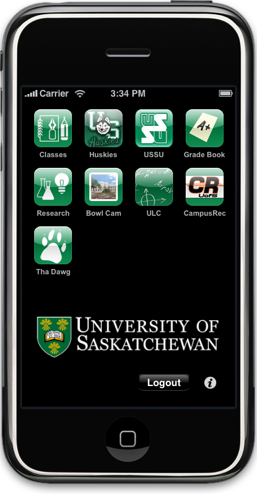
iUSask - iPhone App for the University of Saskatchewan
iUSask - iPhone App for the University of Saskatchewan
Programmers at the University of Saskatchewan in Canada have developed a cutting edge new iPhone application, which will enable students to search library archives, confirm class times and check marks for their work.
Described as a ‘mobile information resource for the University of Saskatchewan’, the app will also enable students to read campus news, view campus maps, access lists of classes for the day and even watch live webcams of the campus.
Subscribe to:
Posts (Atom)
LinkWithin
